commercial · 2025
Fuji-Q Highland
Skate travelogue at the base of Mt. Fuji
Role
Camera Operator / Editor
Production Company
The Berrics
Genre
Travel & Sports
Status
Brand Campaign / Completed
About the Project
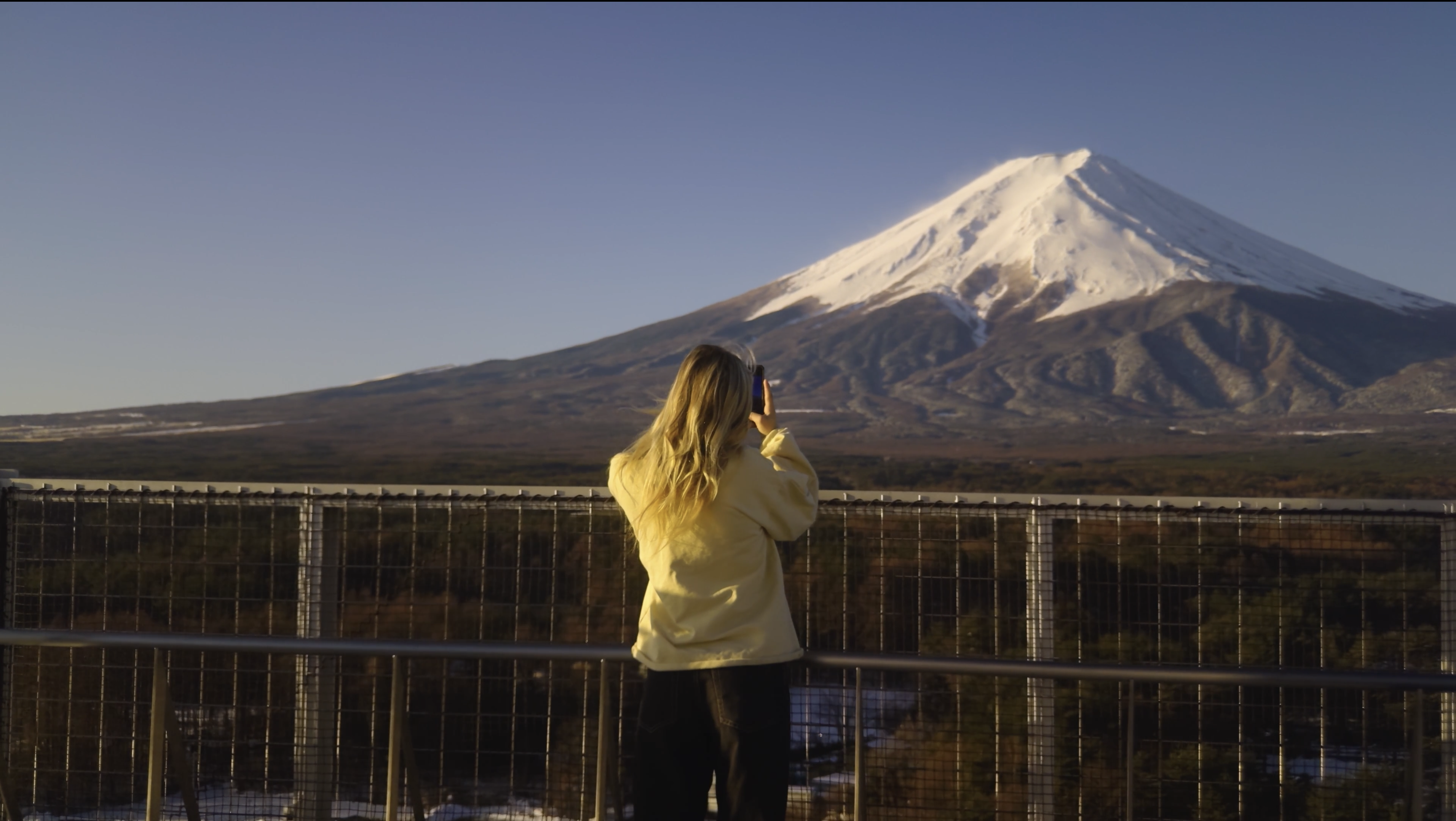
Fuji-Q Highland partnered with Steve Berra and Eric Koston’s The Berrics to open a new skate plaza at the base of Mt. Fuji, designed as more than a park. It’s positioned as a “culture complex,” a place to skate, watch, film, photograph, and gather.
To build hype for the opening, The Berrics brought four pro skaters, Tyler Peterson, Levi Loffelberger, Timothy Johnson, and Sterre Meijer, to Japan for a sneak peek of the park and a street-level tour of the country through their eyes. The film language is part skate edit, part travel film: sessions in the new plaza, sessions in iconic Tokyo locations like Kabukicho Square, and the connective tissue of movement, texture, food, neon, and morning calm.
The result is a launch story that doesn’t just show obstacles and tricks. It shows place and perspective: how a new skatepark fits into a rapidly growing skate scene, and how skating becomes a way of seeing Japan from the inside out rather than from a tourist distance.
Why This Exists
A skatepark launch can be sold like an announcement. This project exists to make it feel like an invitation. By following skaters who are both talented and curious, the film turns “new facility” into “new destination,” and frames the plaza as a living space where culture happens, not just a venue with concrete.
It also exists to highlight a cross-cultural exchange that’s genuinely exciting: Japanese skateboarding growing fast, global skate media bringing attention, and a location so visually iconic it’s instantly mythic. The plaza’s setting under Mt. Fuji becomes a symbol of scale and possibility, while the Tokyo street sessions keep it grounded in real youth culture and real city energy.
At a deeper level, it’s a story about skateboarding as a universal language. You can drop into a country you’ve never been to and still find your people, because the “map” is the same: streets, sound, rhythm, risk, and the joy of a clean rollaway.